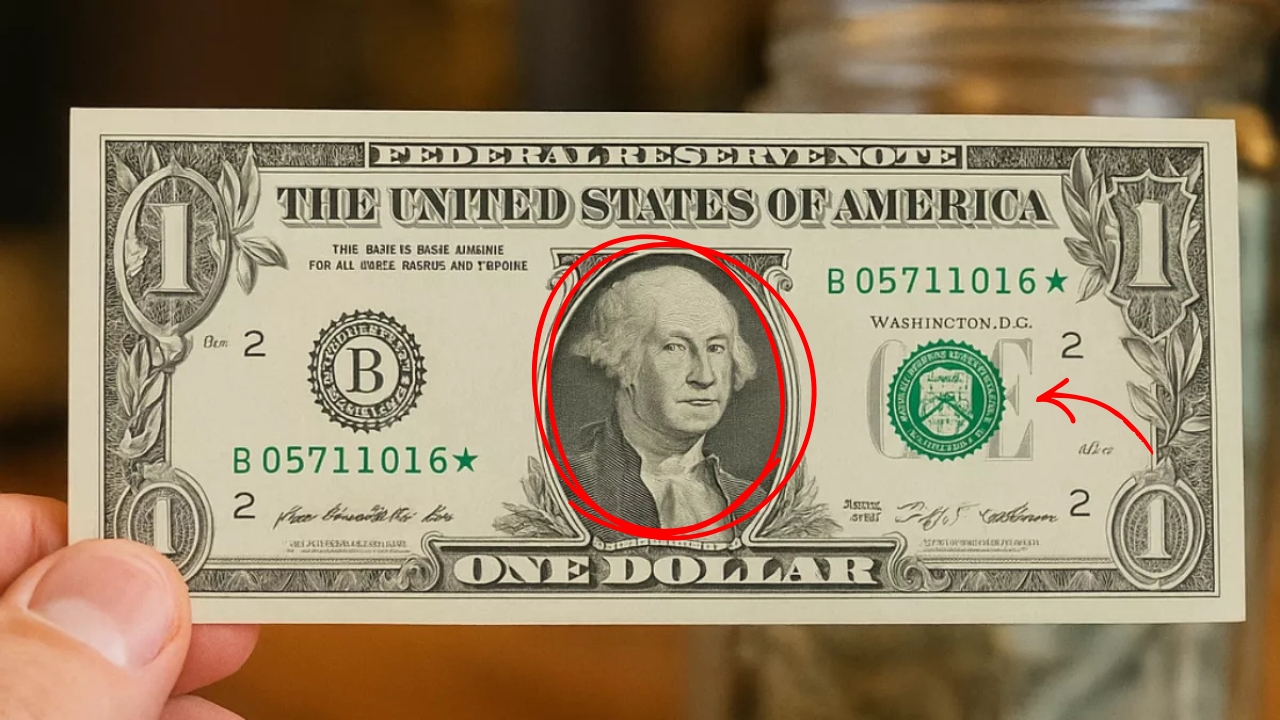
A seemingly ordinary $1 bill discovered in a restaurant tip jar has taken the collector community by storm after it was identified as a rare star note. Star notes, printed as replacements for misprinted currency, are extremely scarce and highly sought after by numismatists. What started as a casual discovery has now transformed into a significant collectible with potentially substantial value.
This rare find demonstrates how everyday currency can unexpectedly become a prized collector’s item.

Key Highlights
The discovery of the $1 star note carries several important details for collectors and enthusiasts:
- Printed as a replacement for defective notes during the original printing
- Features a unique star symbol at the end of the serial number
- Extremely limited circulation compared to standard $1 bills
- High demand among collectors for low-denomination star notes
- Condition and serial number sequence significantly impact value
- Provides a tangible connection to U.S. currency history
- Often seen as a “gateway collectible” for novice numismatists
- Can fetch prices exponentially higher than face value
This star note is a rare intersection of chance, history, and collectible value.

Background on Star Notes
Star notes are an interesting facet of U.S. currency production:
- Issued when a misprint occurs and a replacement note is needed
- Denoted by a small star symbol at the end of the serial number
- Typically produced in smaller quantities than regular notes
- Can exist across all denominations, though $1 star notes are particularly rare
- Highly sought after due to scarcity and historical significance
- Often preserved in protective sleeves to maintain condition
- Collected by both beginners and seasoned numismatists
These notes serve as a testament to the meticulous process behind U.S. currency printing.

Discovery Details
The $1 star note was found under unusual circumstances:
- Located casually in a tip jar at a local eatery
- Appeared indistinguishable from regular bills at first glance
- Serial number confirmed as a genuine star note by an expert
- Estimated to have been in circulation for several decades
- Condition graded as “extremely fine” due to minimal wear
- Sparked immediate interest from local and online collectors
What started as a simple act of generosity led to a remarkable collectible moment.
Collector Value and Market Impact
Star notes can carry impressive value depending on rarity and condition:
- Low-denomination star notes often fetch hundreds to thousands of dollars
- Unique serial numbers or consecutive star notes increase worth
- Online auctions can drive competitive bidding among collectors
- Grading and authentication by professional agencies boost credibility
- Market trends show rising interest in rare currency as an investment
- Physical preservation is crucial to maintain long-term value
- Even casual finds can become cornerstone pieces in a collection
This $1 star note exemplifies how everyday currency can become a high-value asset.
Authentication and Grading
Authenticity and condition are critical in the star note market:
- Expert evaluation ensures the note is genuine and not counterfeit
- Condition grading ranges from poor to uncirculated
- Preservation techniques include archival sleeves and controlled storage
- Professional grading can significantly increase resale value
- Serial numbers, print run, and printing year all factor into valuation
- Certification from recognized numismatic organizations is highly recommended
Proper authentication is essential for collectors to maximize both value and trust.

Historical Significance
Beyond monetary value, star notes carry rich historical context:
- Reflect the meticulous process of U.S. currency production
- Serve as evidence of quality control and replacement protocols
- Provide insight into the circulation and scarcity of low-denomination notes
- Collectors often study star notes to understand printing patterns and rarities
- Connection to U.S. history makes them culturally and educationally relevant
This rare $1 star note offers both financial and historical appeal.

Tips for Collectors
Enthusiasts can take several steps to preserve and enhance value:
- Handle notes minimally and always with clean, dry hands
- Store in protective sleeves or archival-grade holders
- Avoid folding, writing, or exposing notes to moisture
- Keep star notes away from direct sunlight to prevent fading
- Seek professional grading for significant or high-value finds
- Monitor the market for similar notes to gauge potential investment growth
- Join collector forums and communities for insight and networking
Careful preservation ensures these rare finds retain their appeal for years to come.

Pricing and Market Examples
Recent market activity highlights the high potential value of star notes:
- Common $1 star notes can start around $100–$200 in good condition
- Unique serial numbers may sell for $500–$1,000 or more
- Exceptional condition or rare series can surpass $2,000 at auction
- Limited-edition or historical notes often attract international bidders
- Price fluctuations depend on demand, rarity, and grading
This $1 star note discovered in a tip jar could easily join the ranks of high-value collectibles.

Final Verdict
The discovery of the $1 star note in a tip jar is a reminder that rare collectibles can appear in the most unexpected places. With its scarcity, historical relevance, and potential market value, this note transforms a simple piece of currency into a coveted collector’s gem.
For collectors and enthusiasts, star notes represent both an accessible entry into numismatics and an exciting opportunity for investment. This find underscores the thrill of discovery and the enduring appeal of U.S. currency as a collectible.